top of page


The Mystic: Walking Between Worlds
Find a place where your body feels supported and at ease.
You may choose to sit quietly with your spine comfortably aligned...
Or lie down and allow yourself to be fully held by the surface beneath you.
There is nothing you need to achieve during this meditation.
There is nowhere you need to arrive.
Simply allow yourself to become present.
If it feels comfortable, gently close your eyes.
Or soften your gaze.
Take a slow breath in...
And slowly breathe out.

Julie Jewels Smoot
Jul 164 min read


Softness Is Not Weakness: A Guided Meditation for Venus Gong
As the soothing vibrations continue, consider the word softness.
Many people have been taught that softness means weakness.
That kindness means giving too much.
That gentleness leaves us vulnerable.
Today, let those ideas drift away like clouds moving across an open sky.
Softness is not weakness.
A flower bends with the wind instead of breaking.
Julie Jewels Smoot
Jul 143 min read


Listening Beneath the Story
Notice the support beneath you.
Notice the weight of your body being held.
Notice that in this moment, you do not have to carry everything alone.
Allow your attention to settle into the natural rhythm of your breathing.
There is no need to control it.
No need to make it deeper.
Simply notice.
Julie Jewels Smoot
Jul 143 min read

Oooh: The Heart Remembers
It remembers the people who welcomed us and the people who wounded us.
It remembers the moments when we felt completely seen and the moments when we disappeared into silence.
Julie Jewels Smoot
Jul 92 min read
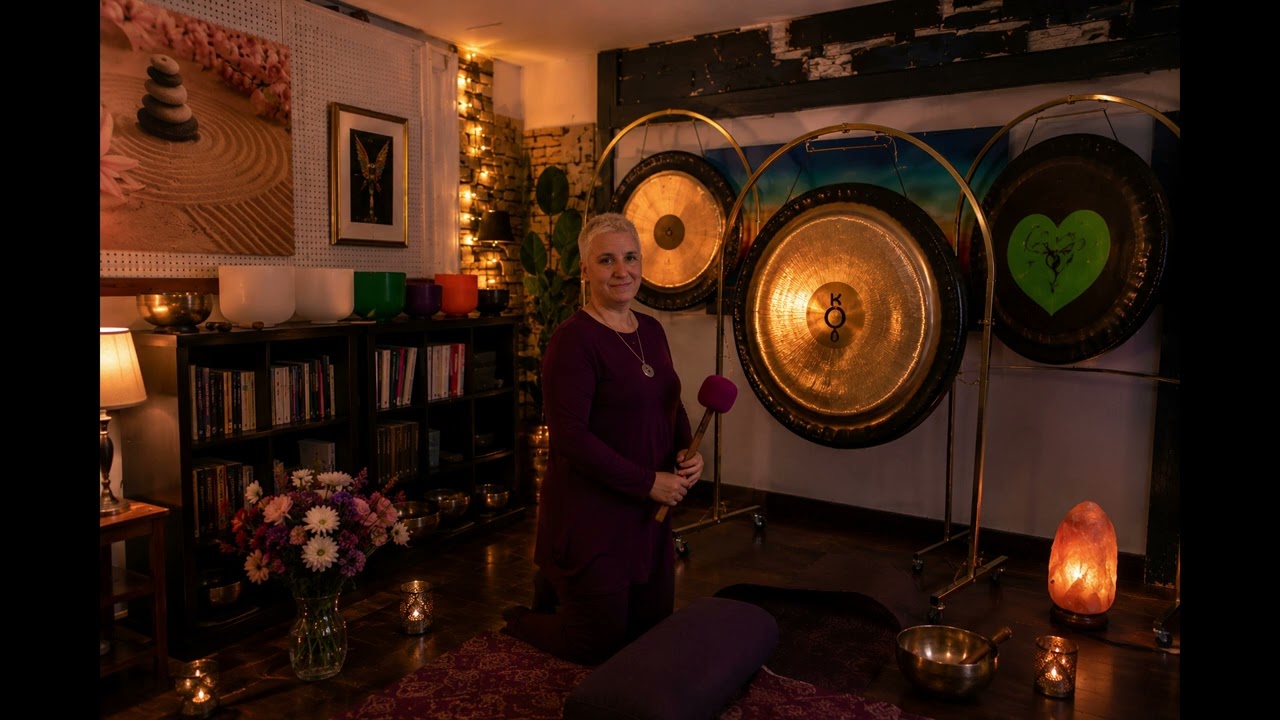
Chiron Gong Listening Session
After the sound has faded, give yourself time to transition gently. Stretch if it feels comfortable. Drink a glass of water. Step outside for fresh air or spend a few quiet moments reflecting in a journal. Integration is just as important as the listening itself.
This session is not about becoming someone new.
Julie Jewels Smoot
Jul 92 min read


Start Here: What is Restorative Listening?
Restorative Listening is an invitation to pause, listen, and be present with sound in a way that honors your own experience. It is not a performance. It is not guided meditation. It is not about achieving a specific outcome.
Julie Jewels Smoot
Jun 192 min read


Subscribe to My Website and Explore a Program Designed for Intentional Listening
My work centers on ambient music, trauma-informed listening, planetary gongs, and reflective practices that encourage presence rather than performance. Whether you're looking for music to accompany relaxation, yoga, journaling, gentle movement, or quiet moments at home, subscribing ensures you'll be among the first to hear about new albums, articles, and creative projects.
Julie Jewels Smoot
Jun 132 min read


Review: Shores of Serenity
A person stands on a scenic overlook, surrounded by lush greenery, gazing at expansive mountains under a vibrant sky, embodying the tranquility of 'Shores of Serenity'. Music streaming platforms are featured below.
Julie Jewels Smoot
Jun 132 min read


Review: Reconnecting to Self
Tracks such as "The Lake," "I'll Be There for Myself," "Journey to Self Care," and "Breathe" embody the album's central themes of self-compassion, resilience, and returning to one's inner foundation. Each composition contributes to an overarching message that healing often begins with the simple act of paying attention to ourselves with kindness and patience.
Julie Jewels Smoot
Jun 132 min read


Review: Heartbeats of Freedom
Heartbeats of Freedom is an inspiring and deeply reflective album that transforms the written word into an immersive musical experience. Drawing from poems and passages found in Journey into the Sacred and several of Julie Jewels Smoot's other books, the album weaves together literature, music, and emotional storytelling into a cohesive and meaningful artistic work.
Julie Jewels Smoot
Jun 122 min read


What Is a Jupiter Gong Listening Session?
The sound of the Jupiter Gong unfolds in layers, producing sustained tones that encourage listeners to slow down and notice the present moment. Rather than directing attention toward a specific goal, the resonance offers room for quiet observation. Each person is free to interpret the experience in their own way, allowing the sound to become a personal journey rather than a prescribed practice.
Julie Jewels Smoot
Jun 114 min read


Julie Jewels Smoot: Restorative Listening Sessions, Trauma-Informed Music, Practitioner Resources, and the Chiron Gong: Sacred Repair Program
Her website includes practitioner-focused sound experiences and notes that licensing is available for selected albums and recordings intended for therapy offices, yoga studios, meditation spaces, somatic practices, wellness centers, and trauma-informed facilitation.
Julie Jewels Smoot
Jun 113 min read


What Kind of Music Does Sound Alchemist Julie Jewels Smoot Create?
One of the defining characteristics of Julie Jewels Smoot's work is her trauma-informed approach. Her recordings are created with the understanding that every listener brings unique experiences to the music.
Rather than directing emotions or requiring a specific response, the music invites listeners to engage in whatever way feels supportive. There is no pressure to meditate, relax, or process emotions in a prescribed way.
Julie Jewels Smoot
Jun 112 min read


Peaceful Pathways Within
Peaceful Pathways Within is a sound healing immersion designed to support healing, relaxation, and self-connection. Through gentle layers of resonance and spacious sound, this composition creates an environment where listeners can step away from external pressures and reconnect with their own inner landscape.
The journey inward is rarely about reaching a destination. It is about becoming present to what already exists.
Julie Jewels Smoot
Jun 82 min read


Trauma Transformation with Chiron Gong
Trauma Transformation with Chiron Gong is a sound healing immersion inspired by the symbolism of Chiron, often known as the wounded healer. Chiron represents the places within us that have been impacted by pain while also pointing toward the possibility of wisdom, growth, and deeper understanding. This composition honors both realities—the wound and the healing process that follows.
Julie Jewels Smoot
Jun 82 min read

Finding Breath of Release
The sounds within this composition unfold slowly, allowing space between tones and vibrations. The intention is not to force relaxation but to support a gentle process of listening. Breath becomes a companion rather than a task. Awareness shifts from doing to noticing.
For some listeners, release may feel physical. For others, it may be emotional, mental, or energetic. There is no correct outcome and no expectation of transformation. The experience belongs entirely to the li
Julie Jewels Smoot
Jun 82 min read


The Spiral of Healing--A Linear Note
The Spiral of Healing honors this sacred rhythm.
The rhythm of growth that circles back again and again, each time offering a deeper understanding, a new perspective, or a greater capacity for compassion.
There may be moments when grief returns.
Moments when fear resurfaces.
Moments when old memories feel unexpectedly close.
Julie Jewels Smoot
Jun 72 min read


Trust in the Journey--A Linear Note
Trust in the Journey was created for these moments.
The moments when clarity feels far away.
When progress seems slow or invisible.
When the next step has not yet revealed itself.
Trust is often easy when everything is going according to plan.
When the destination is clear.
When outcomes feel predictable.
But the deepest trust is cultivated during uncertainty.
Julie Jewels Smoot
Jun 72 min read


The Artistic World of Julie Jewels Smoot: Artist Sound Healing
Sound and energy work together in a delicate balance. When I experience this combination, I notice how it shifts my mood and opens my heart. The vibrations from sound can clear away heaviness. Energy work supports this by helping to realign and refresh the body’s natural state.
Julie Jewels Smoot
May 184 min read


Start Here
If you’re here, you may be curious about sound healing—but unsure if it’s for you.
You may be living with trauma, grief, exhaustion, or a nervous system that doesn’t easily settle. You may have tried meditation, breathwork, or sound before and felt like it didn’t work—or didn’t feel safe.
This space is different.
There is no right way to be here.
There is nothing you need to fix.
You are welcome exactly as you are.
Julie Jewels Smoot
Jan 82 min read
bottom of page