top of page

The Role of Consent in Sound Work

  • Writer: Julie Jewels Smoot
    Julie Jewels Smoot
  • 3 days ago
  • 3 min read
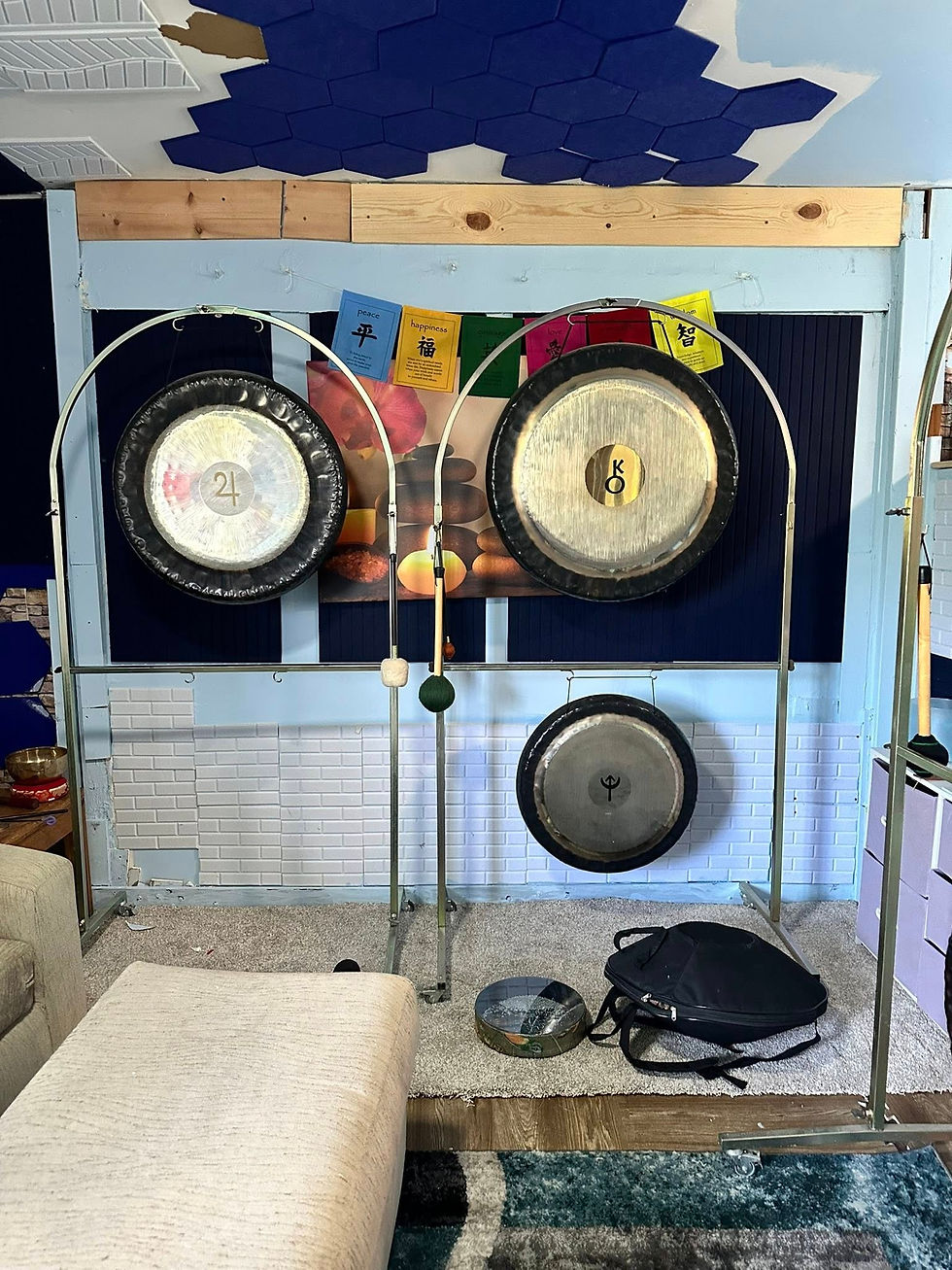
The Role of Consent in Sound Work: Emphasizing Choice and Safety with Chiron Gong, promoting emotional release and compassion in a trauma-informed setting.

Consent is often discussed in therapy, medicine, and personal relationships, but it is not talked about enough in healing spaces.


Yet consent matters deeply in sound work.


Many people enter healing environments carrying experiences where their boundaries, emotions, bodies, autonomy, or nervous systems were ignored, pressured, controlled, or overridden. Because of this, even well-intentioned healing spaces can sometimes feel unsafe if choice is not respected.


Trauma-informed sound work recognizes this reality.


Consent is not just about asking permission once at the beginning of a session.

Consent is an ongoing relationship with choice.


It means the listener remains in control of their own experience.


In my work as a sound alchemist, trauma-informed guided listening is built around nervous system respect, pacing, autonomy, and permission rather than pressure or performance.


Nothing is required.


The listener is allowed to:


  • stop the session

  • lower the volume

  • move around

  • emotionally disconnect

  • pause the recording

  • leave and return

  • choose distance from the sound

  • decide what feels safe


All responses are valid.


This matters because trauma often teaches the body that choice is unsafe, unavailable, or meaningless. Many people learned to override discomfort in order to survive.


Healing spaces should not recreate that dynamic.


In some wellness environments, people may feel pressured to:


  • stay present no matter what

  • push through discomfort

  • remain still

  • continue emotional processing

  • release emotions publicly

  • “trust the process”

  • ignore nervous system overwhelm


But trauma-informed sound approaches the body differently.


The nervous system’s boundaries deserve respect.


Consent means understanding that a person’s “no,” pause, hesitation, silence, or withdrawal are important forms of communication.


The body does not owe participation.


This is especially important for people living with PTSD, anxiety, chronic stress, grief, sensory overwhelm, burnout, or trauma histories where control and autonomy were repeatedly compromised.


Planetary gongs, Tibetan singing bowls, hand pan, and other sound instruments create powerful resonance and vibration. While these sounds can feel grounding and supportive for many people, trauma-informed practice recognizes that every nervous system responds differently.


The same sound may feel calming for one person and activating for another.

Neither response is wrong.


This is why choice matters more than expectation.


The Chiron Gong, Neptune Gong, Jupiter Gong, Heart Gong, and Sidereal Moon Gong are all used in my work as invitations rather than demands. The listener decides how close or distant they wish to be from the experience.


The sound is offered gently.


Not as control.

Not as pressure.

Not as forced transformation.


But as accompaniment.


Consent also changes the emotional atmosphere of healing spaces. When people know they are allowed to stop, rest, move, or disengage, the nervous system often begins to soften naturally.


Not because it was forced.


But because it no longer has to defend itself against being overwhelmed.


That shift can be profound.


For many people, true safety does not begin when someone tells them to relax.

It begins when they realize:


“I am allowed to choose.”


Trauma-informed guided listening protects that choice.


The listener remains the authority over their own body, boundaries, and pacing.


And sometimes healing begins in the simple experience of finally being respected.


For more trauma-informed guided listening sessions, planetary gong recordings, and nervous system-centered sound experiences, visit Julie Jewels Smoot Sound Alchemist.

Comments


Julie Jules Smoot 

All audio recordings, guided listening experiences, and sound works on this site are created and voiced by Julie Jewels Smoot, JS Worldbridger and Author Honey Badger. 

No AI-generated voices, deepfake technology, or synthetic identity tools are used in the creation of this work. All recordings reflect original human performance, composition, and production.

The offerings on this site are presented as trauma-informed guided listening and sound experiences. They are not therapy, medical treatment, mental health care, or clinical services, and they are not intended to diagnose, treat, cure, or prevent any condition.

Participation is always optional. Listeners are free to pause, stop, or disengage at any time. No outcome, improvement, or response is promised or required.

This site provides pre-recorded audio content only and does not offer live facilitation, coaching, counseling, or real-time interaction unless explicitly stated.

By engaging with this content, you acknowledge that you are responsible for choosing the type of support that best meets your needs.

Frequently asked questions

©2023 by Julie Jewels Smoot.  Proudly created with Wix.com

bottom of page